
Why Is My Vape Pod Leaking? Causes & Fixes
Learn why vape pods leak, how to tell condensation from a real leak, and how refill technique, e-liquid choice and pod wear affect performance.
 Enlarge
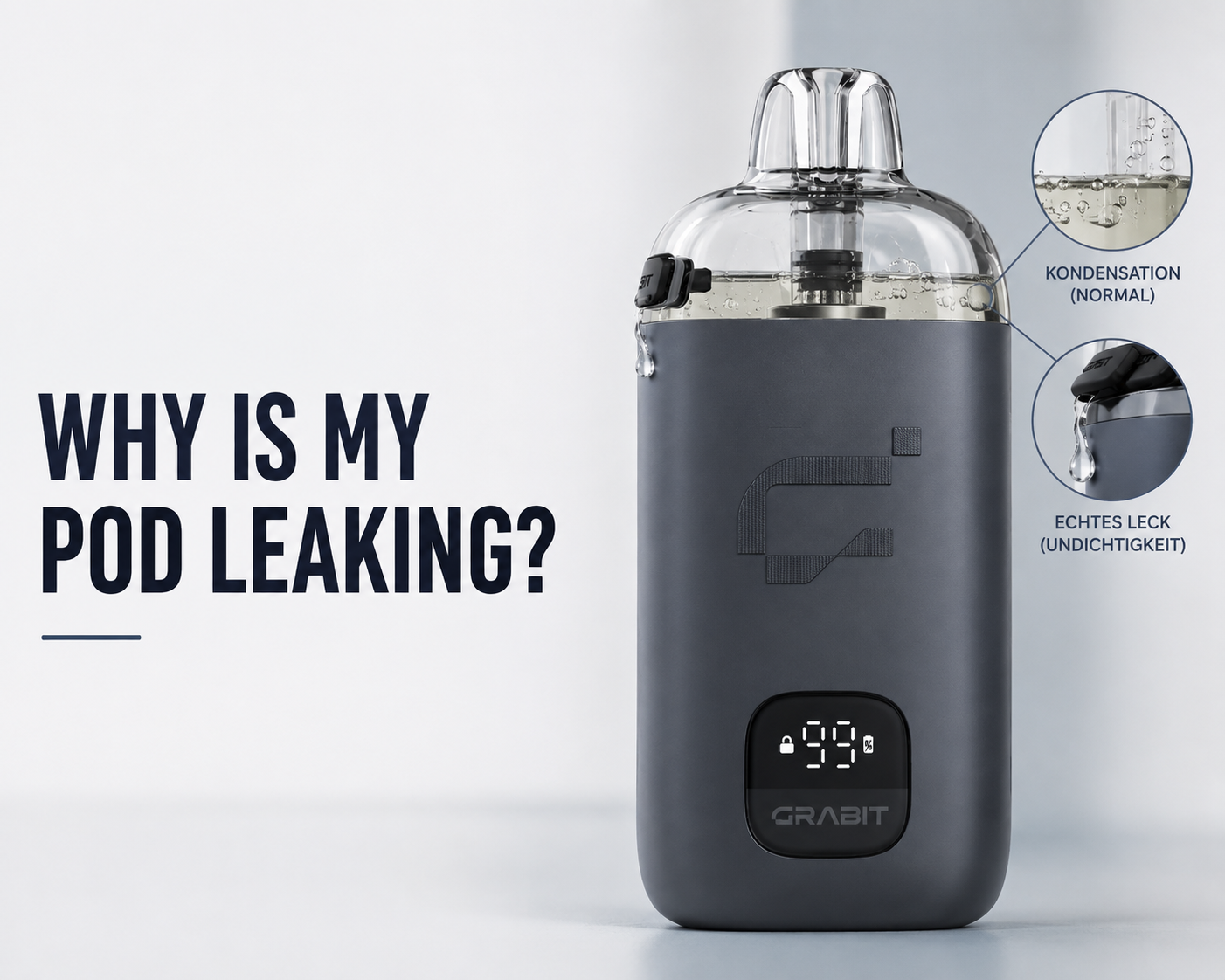
A leaking pod is one of the most common frustrations with a refillable vape. However, not every trace of moisture means the pod has failed. Refillable systems contain e-liquid, warm vapour and narrow airflow channels in a very small space. As vapour cools, a light film of condensation can collect around the base of the pod or the device contacts.
A true leak behaves differently: liquid repeatedly escapes from the fill port, airflow opening or pod connection, and returns soon after the area has been wiped dry. Condensation usually needs only routine cleaning, while persistent leaking points to a problem with filling, sealing, liquid flow or pod condition.
Why refill technique and e-liquid choice matter
Many leaks begin during refilling rather than during vaping. If a pod is filled beyond its intended level, or liquid is directed into the central airflow path, excess liquid can reach areas designed for air rather than e-liquid. A fill port that is not fully closed can cause a similar problem.
- Check that the seal sits flat before reinstalling the pod.
- Keep the fill area clean and wipe away liquid around the opening.
- Fill only to the recommended level and keep e-liquid out of the central airflow channel.
- Make sure the fill port is fully closed after refilling.
E-liquid becomes less viscous in warm conditions, so a filled device left in direct sunlight or a hot car may be more likely to seep. The PG/VG ratio and overall viscosity also affect how quickly liquid moves through the wick. A formulation that is much thinner or thicker than the pod was designed for can contribute to flooding, gurgling or inconsistent wicking. If leaking starts immediately after changing liquid, compatibility is one of the first things to review.
How a controlled refill design can help
A controlled refill design can reduce some of these handling variables. GRABIT MAX uses a refillable 10ml Open Pod, while easyLiQ uses an injector-style 10ml bottle designed to connect directly with the system's refill interface. GRABIT presents this as a 1-second refill concept: connect, press and refill.
This does not mean that any refillable system can be described as completely leak-proof. Fewer loose filling steps can, however, make the routine more consistent and reduce spills, misalignment and accidental overfilling.
When leaking becomes a pod-condition issue
A refillable pod is still a consumable component. Heat cycles, repeated filling and everyday handling gradually affect the coil, seals and plastic housing. If the same pod continues to leak after the fill port has been checked, the device has been cleaned and the liquid has been confirmed as compatible, the pod itself may simply be worn.
- Persistent gurgling or a flooded draw.
- Weak, muted or burnt flavour.
- Visible damage around the seal or pod housing.
- Leakage that returns after every cleaning and refill.
These are signs that replacement is more practical than continued troubleshooting. The most reliable approach is simple: clean first, check the refill routine and liquid second, and replace the pod if the same symptoms keep returning.
The takeaway
A leaking pod is rarely solved by one magic fix. It is solved by treating the pod, liquid and refill method as one system. A clean filling routine, compatible e-liquid and timely pod replacement do more to prevent repeated leaking than any single troubleshooting trick.
Frequently Asked Questions
How can I tell condensation from a real pod leak?
Condensation is usually a light film around the pod base or device contacts and does not quickly return after cleaning. A real leak repeatedly releases liquid from the fill port, airflow opening or pod connection.
Can the wrong e-liquid make a pod leak?
Yes. E-liquid that is much thinner or thicker than the pod is designed for can affect wicking and contribute to flooding, gurgling or leakage.
Why does my pod leak after I refill it?
Common causes include overfilling, liquid entering the central airflow channel, an incompletely closed fill port, or a seal that is not sitting flat.
When should I replace a leaking pod?
Replace it when leakage continues after cleaning and checking the refill routine, especially if there is persistent gurgling, poor flavour or visible seal damage.